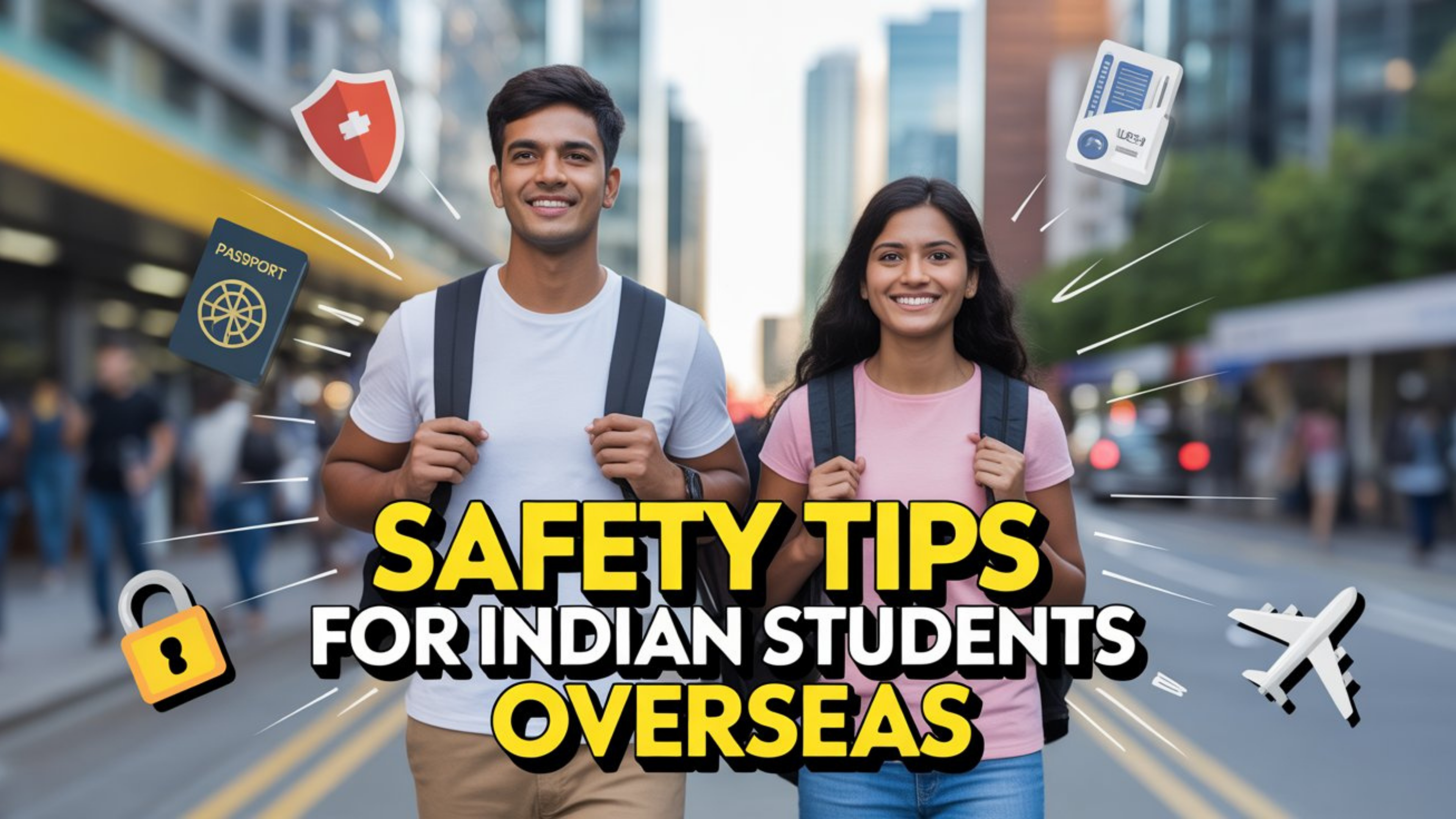
Safety Tips for Indian Students Living Overseas
Student Life Abroad
Safety Tips for Indian Students Living Overseas
-
04-Oct-2025

Introduction
Studying abroad is an exciting journey full of learning, cultural exchange, and personal growth. However, living in a foreign country comes with its own safety challenges. Indian students, in particular, may face language barriers, unfamiliar customs, and different safety norms, making it essential to prioritize personal security.
This blog provides practical safety tips, preventive measures, and emergency strategies to ensure that Indian students live safely and confidently while studying overseas.
1. Research Your Destination
Before leaving India, it’s crucial to research your host country:
Learn about local laws, cultural norms, and public behavior
Identify safe neighborhoods for students and accommodation options
Understand the crime rates and common safety concerns
Tip: Visit official government websites and international student forums to gather reliable information.
2. Choose Safe Accommodation
Accommodation is one of the most important aspects of student safety:
Opt for university hostels or verified student housing
Check for security measures like CCTV, security personnel, and secure entrances
Avoid isolated areas, poorly lit streets, or unverified rental apartments
Tip: Connect with senior students or student associations to get feedback on safe accommodations.
3. Maintain Personal Safety
Personal safety habits help prevent accidents or attacks:
Avoid walking alone at night in unfamiliar areas
Keep emergency contacts, including local police, embassy, and friends, handy
Use apps like Google Maps to plan safe routes
Be cautious with strangers and avoid risky situations
Tip: Carry a personal alarm or whistle for added security.
4. Stay Connected
Maintaining communication is key for safety:
Inform family or roommates about your daily plans
Use location-sharing apps to let trusted contacts know your whereabouts
Stay in touch with local Indian student communities for support
Tip: Regular check-ins with friends or family reduce worry and provide quick help in emergencies.
5. Travel Smart
Transportation can pose risks, especially in unfamiliar cities:
Use licensed taxis, rideshare apps, or public transport rather than hitchhiking
Avoid traveling late at night alone
Keep your belongings secure on buses, trains, or taxis
Tip: Learn local traffic rules and pedestrian safety practices.
6. Protect Your Belongings
Theft can be common in some countries:
Keep important documents (passport, visa, ID) safe and carry copies
Use locks for luggage and storage
Avoid displaying expensive gadgets or jewelry in public
Tip: Use anti-theft backpacks and secure wallets to minimize risks.
7. Cybersecurity Awareness
Digital safety is equally important:
Avoid sharing personal information on public Wi-Fi networks
Use strong passwords and enable two-factor authentication
Be cautious about online scams targeting international students
Tip: Keep software and antivirus programs updated on all devices.
8. Learn Basic Self-Defense
Basic self-defense skills increase confidence and safety:
Consider enrolling in self-defense or martial arts classes
Carry legal self-defense tools if allowed in your country
Stay calm and seek help immediately in threatening situations
Tip: Knowledge of self-defense can prevent panic and improve response in emergencies.
9. Understand Health and Emergency Services
Knowing how to access medical help is essential:
Learn about local hospitals, clinics, and emergency numbers
Keep health insurance active and carry insurance cards
Understand procedures for emergencies, including ambulance services
Tip: Universities often provide orientation sessions about local healthcare and safety resources.
10. Be Culturally Sensitive
Respecting local customs prevents misunderstandings and potential conflicts:
Dress appropriately according to cultural norms
Avoid controversial topics in public discussions
Understand local laws about alcohol, public gatherings, and behavior
Tip: Awareness of cultural expectations reduces risk and promotes respectful interactions.
11. Stay Informed About Local Alerts
Keep up-to-date with local news and safety advisories:
Subscribe to government alerts and embassy notifications
Follow reliable local news sources
Avoid areas with civil unrest, protests, or natural hazards
Tip: Being proactive ensures preparedness for unexpected situations.
12. Join Student Communities and Networks
Being part of a community enhances safety:
Join university student groups or Indian associations
Attend orientation programs and networking events
Form buddy systems for traveling or exploring new areas
Tip: Peer support provides both social comfort and an extra layer of security.
13. Emergency Preparedness
Always have a plan for emergencies:
Memorize local emergency numbers (police, ambulance, fire)
Keep a list of embassy or consulate contacts
Have cash and essential documents ready for urgent situations
Tip: Familiarity with emergency procedures ensures quick and confident action during crises.
14. Maintain Mental Well-Being for Safety
Mental wellness contributes to personal safety:
Avoid over-stressing about safety but remain alert
Seek counseling if anxious or fearful
Join support groups to share experiences and coping strategies
Tip: A calm, aware mindset helps in making safe decisions in unfamiliar environments.
Conclusion
Safety is a critical aspect of studying abroad for Indian students. By researching the destination, choosing secure accommodations, practicing personal and digital safety, learning self-defense, staying informed, and building a support network, students can significantly reduce risks.
Prioritizing safety allows students to focus on academics, social life, and personal growth while making the most of the study abroad experience. Remember, being aware, prepared, and proactive ensures a secure and enriching international journey.


